Every draft cycle gets labeled early, and the 2026 class has quickly been defined as a weaker group. That label, however, has more to do with uncertainty at premium positions than a lack of overall talent. Quarterback, edge rusher, and offensive tackle typically anchor the top of the draft, and this year, each of those groups comes with legitimate questions that have reshaped how teams are viewing the board.
At quarterback, Mendoza has separated himself as the clear QB1, but beyond him, the class is filled with projection. Prospects like Drew Allar, Cade Klubnik, and Garrett Nussmeier entered the year with first-round expectations but failed to fully solidify their stock. Teams evaluating that group are weighing traits and flashes rather than complete, consistent profiles.
The edge class follows a similar pattern. Ruben Bain Jr. has the production and disruptive flashes teams look for, but there are ongoing debates about his physical ceiling and how his game translates against NFL-caliber tackles. Arvell Reese is one of the more intriguing players in the class, but as a converted linebacker, he is still developing the technical aspects of playing on the edge. There is upside across the group, but very little certainty at the top.
Offensive tackle was expected to bring stability to the early portion of the draft, but the group had a subpar showing at the combine. Testing numbers did not match expectations, and several prospects left evaluators wanting more in terms of movement skills and overall polish. For teams looking for plug-and-play tackles, this class has introduced more hesitation than confidence.
What this creates is a draft where the top feels unsettled, but once you move into the range of picks 15 through 50, the board begins to fill out quickly with legitimate contributors. There may not be elite, can’t-miss prospects at the top, but there is a significant number of players in that next tier who project as quality starters.
The Strength of the Class Lies at Wide Receiver
That dynamic becomes especially important when you shift focus to the wide receiver group, which stands out as the deepest position in the class from the first through the third round.
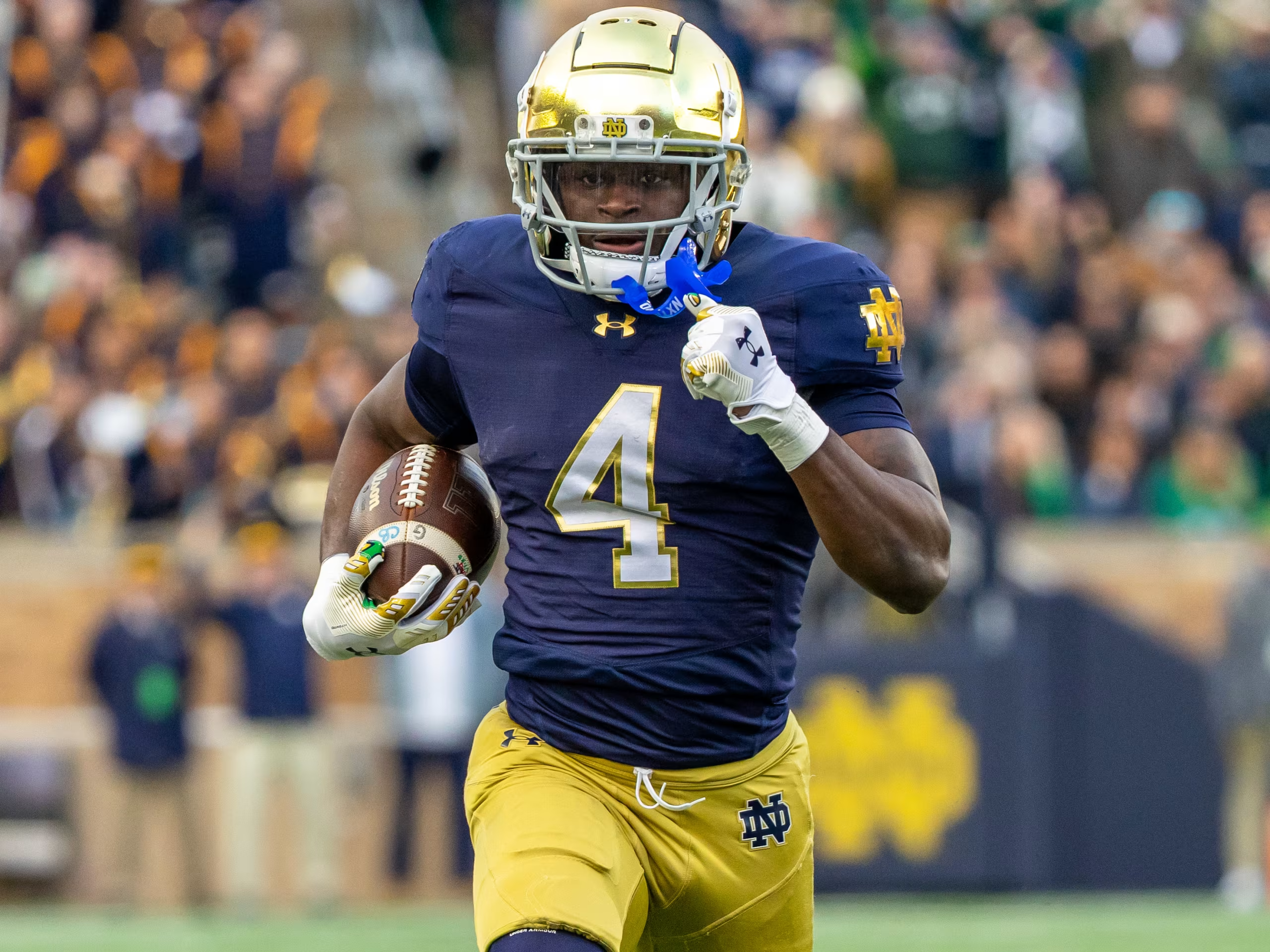
At the top, there is a relatively clear tier of six receivers who have separated themselves as potential first-round picks. Carnell Tate, Makai Lemon, and Jordyn Tyson form the consensus top group. Tate brings prototypical size and ball skills, thriving in contested situations and projecting as a true outside alpha. Lemon offers elite quickness and separation ability, making him an ideal fit for modern spacing-based offenses. Tyson blends size, route running, and versatility into one of the more complete profiles in the class.
Just behind them is a second tier that includes Denzel Boston, KC Concepcion, and Omar Cooper Jr., all of whom have gained traction as potential late first-round selections. Boston provides size and physicality on the perimeter, Concepcion offers dynamic versatility as a movable offensive weapon, and Cooper has emerged as a late riser with a strong combination of athleticism and playmaking ability.
All six of these receivers could realistically be selected in the first round, but given the overall depth of the position and the lack of clear separation between tiers, it would not be surprising to see some of the second-tier players fall into the second round as teams prioritize other positions early, knowing comparable receiver talent will still be available later.
When a position group is this deep, teams drafting in the late first round are less pressured to address it immediately. Instead, they can focus on positions with less depth or higher positional value, with the understanding that a starting-caliber receiver will likely still be on the board when they pick again in the second round.
Beyond the top six, the receiver board becomes tightly clustered. Evaluations begin to vary significantly depending on scheme, team preference, and individual scouting philosophy. There is little consensus, but there is a clear volume of talent.
In no particular order, that next group includes Chris Bell, Chris Brazzell II, Skylar Bell, Germie Bernard, Zachariah Branch, Malachi Fields, Elijah Sarratt, Ja’Kobi Lane, and Antonio Williams.
Some evaluators may view these players as late first-round talents, while others see them as mid-to-late second round prospects. The lack of consensus adds another layer of unpredictability, but it does not diminish the overall strength of the group.
There are 15 receivers who could reasonably be selected within the first three rounds. Of those, projecting at least 12 to go by the end of day two feels like a real possibility, and there is a strong chance that as many as 10 could come off the board within the first two rounds.
Instead of locking into a position early, front offices can build flexible strategies that account for multiple outcomes. The ability to address a premium position in the first round while still having access to quality receiver options in the second becomes a major advantage.
How Teams at the Top Must Adjust Their Draft Strategy
Teams picking in the top ten will be the dominoes that determine how this class falls into place.
The Giants at No. 5 are a prime example. Carnell Tate could be the best weapon available when they are on the clock, and he would immediately fill a need at receiver. However, the decision becomes more complex when considering the broader board. Would they rather take Tate at No. 5, or select a player like Arvell Reese, Sonny Styles, or David Bailey at a premium position, knowing that one of these high-level receivers could still be available at pick 37?
The Browns at No. 6 and the Saints at No. 8 face similar decisions. Both teams have needs across their rosters and must weigh the immediate impact of drafting a receiver early against the opportunity to address other positions while trusting the depth of the class.
Kansas City at No. 9 presents one of the most interesting scenarios. If Carnell Tate, Jordan Tyson, and Makai Lemon are available, the fit is obvious and the offensive upside is significant. However, the Chiefs also have needs on the defensive side of the ball, with prospects like Ruben Bain Jr., Mansoor Delane, or Jermod McCoy offering value at premium positions. The question becomes whether to secure a top receiver immediately or wait until pick 40, where a comparable talent could still be available.
It reshapes how teams prioritize needs, value positions, and construct their boards. Franchises with multiple picks in the top 50 are particularly well-positioned to take advantage of this dynamic. They can address a premium position early and still land a receiver who fits their system and long-term plans.
The teams best suited to capitalize are the ones that remain disciplined. Those who resist the urge to reach for positional need and instead trust the depth of the class can come away with both value and impact players.
The 2026 wide receiver class may lack a clear-cut superstar at the very top, but its strength lies in its depth. There are multiple receivers throughout the first three rounds who project as immediate contributors, and that reality will shape how the entire draft unfolds.